Image Ref : DRA 2323.tif
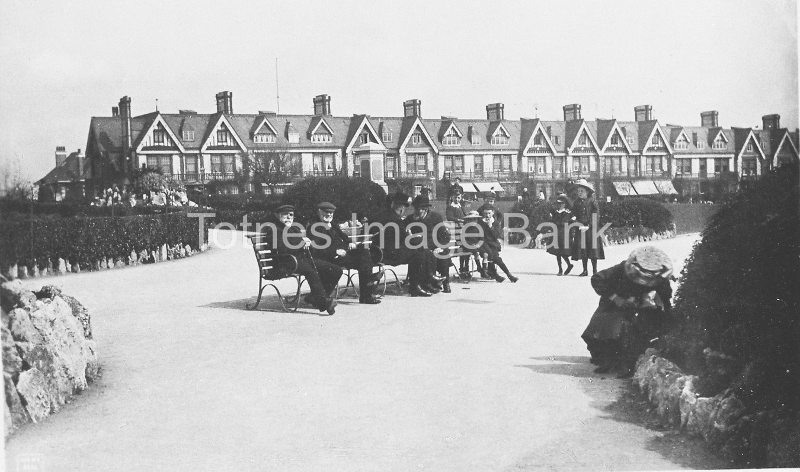
Freedom Fields Park, Plymouth, hospital, WW1
In Freedom Fields Park 4th Southern General Hospital, Salisbury Road, Plymouth, WW1 - converted from school into military hospital for duration. Salisbury Road School was taken over on Wednesday August 5th 1914. The Territorial Army removed all desks and forms, all of which were screwed to the floor and thus had to be unscrewed. On the Friday the building was clear and cleaning commenced. The contractors for the ordnance supplies, Messrs Spooners Ltd, delivered all the equipment and signs such as “Orderlies will not pass this barrier� and “Please wipe your feet� appeared as if by magic. On Tuesday 11th August 1914 a Matron (Miss McKay), 22 sisters and 68 staff nurses arrived and the hospital opened on Monday August 17th 1914. There were 280 beds and a treatment centre and a neurological section. On Sunday August 31st 1914 the Officer Commanding at Plymouth received a telegram “Prepare to receive 120 wounded�. An ambulance train of 100 tired and dusty men arrived at Friary Station from northern France and were transferred to the Salisbury Road temporary hospital. Lt Col H.W.Webber and Major J.Cheyne Wilson were in charge of the hospital. Many Plymouth schools were taken over as hospitals during WW1. WESTERN HOSPITALS AN APPPRECIATION A correspondent in the current number of “The Nursing Times� gives an interesting description of “two Territorial Hospitals� one at Plymouth and the other at Exeter. He says - imagine a huge building of the usual middle school type, with imposing façade, numerous rooms of varying size and you have an idea of the 4th Southern General (Territorial) Hospital. The Salisbury Road School, Plymouth, was selected for the purpose, and the nurses – hurriedly mobilised – soon got the big place into working order. Miss Smale (matron of the Royal Devon and Exeter Hospital) is the principal matron and Miss Tait McKay the matron in residence. 500 wounded can be accommodated. The men, all of whom have seen war in its most ruthless and appalling aspect are most of them looking forward to returning to the front; for some, however, it is only possible to make their lot a little easier. There is a well trained staff, many of the nurses belonging to the South Devon and East Cornwall Hospital, some sisters and private nurses willingly doing probationers work. Only a nurse can understand the self-denial in little things this involves. It means very early rising, very hard work and responsibility. Usually the ‘pro’, even if she has plenty of hard work has no responsibility or mental strain but these nurses have it all and accept it all willingly. They are helping to swell the roll of honour written only in the grateful hearts of the patients. Indeed, few know of the daily acts of self-denial. The gramophones are kept busy all day, all sick soldiers seem to be cheered by them and people have been very generous in gratifying this wish. There is a martial atmosphere about Plymouth, the nurses are billeted in houses near and may not leave the garrison nor may they wear mufti, only the grey cloaks and scarlet-edged capes of the Territorial service. The Red Cross trains are constantly passing through Exeter taking some of the ‘cot’ cases to Plymouth and Devonport and leaving others at Paignton and Exeter. Trained nurses travel with each train and when rest stations are reached the men are given a hot meal. These arrangements are undertaken by the V.A.D., who supply plain simple food to those who may have it and the special cases whatever may be allowed. Tables are placed on the platform so that the helpers can conveniently serve the men, the station is of course closed to the public.. A group of twelve nurses connected with the 4th Southern General Hospital have left for the front. (From the Devon & Exeter Gazette 31st December 1914) DRA 3004 PLY 016